



Brain Composition 101: What Fats Make Up the Brain and What to Eat for Brain Health background image
March 31, 2025

Brain Composition 101: What Fats Make Up the Brain and What to Eat for Brain Health

Key Takeaways:

  • Our brains contain around 60% fat, one of the highest percentages of any organ in the body. 

  • Types of fat in the brain include phospholipids, essential fatty acids, DHA, and saturated fat.

  • You can support the fat composition of your brain by consuming healthy fats in your diet.

So your brain is mostly made of fat — why is this important to know? The troubling fact is, more and more people are affected by cognitive decline and neurodegenerative disease every year, and modern medicine has yet to provide foolproof treatment solutions. 

It will serve you well to know the types of fats that make up your brain, how to support your brain's composition, and ideally minimize the risk of cognitive decline and dysfunction before it starts. 

Table of Contents:

  • Your Brain is 60% Fat
  • Fats That Make Up the Brain
  • Dietary Fats to Support Brain Health
  • It's Never Too Late to Support Your Brain

Your Brain is 60% Fat

Why does the brain have such a high concentration of fat? Because lipids are essential to transmit and receive the electrical impulses that stimulate our thoughts, memories, and senses, aka the central functions of the brain. Lipids also act as insulation around nerve fibers and create the structure of our cell membranes. In this sense, lipids are extremely important to the essence of who we are as humans — without them, our brains would not have the extraordinary capacity for complex thoughts, feelings, and coordination that they do. Pretty amazing stuff. 

With that in mind, let's take a closer look at the types of fats that make up the brain and how to support your brain's lipid composition through your diet. 

Fats That Make Up the Brain

Many types of fats make up the brain, but a few stand out among the rest. 

Phospholipids

Phospholipids (like phosphatidylcholine) are a type of fat that makes up your cell membranes, including neurons and other brain tissues. Phospholipids provide structure to the cell membrane, yet they're flexible enough to allow nutrients into the cell and waste out of the cell. They also help facilitate cellular communication, including nerve signals in the brain and neurotransmitter production. 

We lose phospholipids as we age, so it's important to replace them through your diet, especially if you want to avoid memory lapses and wandering attention that "comes with aging." When you're conscious of consuming the right fats for your brain health, this doesn't have to be the case. In fact, phospholipids and essential fatty acids are two of the most important nutrients to keep your brain functioning well at any age.* 

Essential Fatty Acids

Speaking of EFAs, these polyunsaturated fatty acids are crucial for brain health. Contrary to popular belief, both omega-6 and omega-3 essential fatty acids—linoleic acid (n-6) and alpha-linolenic acid (n-3)—are needed for optimal cellular structure and function, including neuronal function. The most important thing is to make sure you are consuming the pure, non-oxidized forms of these omega fatty acids. In their pure form, EFAs are brain fuel. In their toxic, oxidized form (which you'll find in most processed junk foods or by eating out), they will have a detrimental effect on our brain health. 

DHA and Arachidonic Acid (AA)

DHA and arachidonic acid are crucial fatty acids that deserve a special mention in the context of brain structure and function, as they are incredibly important for early brain development and infant growth. You've probably heard of EPA and DHA as types of omega-3 fatty acids. DHA is the more important omega-3 for brain health (which is why BodyBio Resolvin contains a higher ratio of DHA to EPA). 

Arachidonic acid plays a critical role in infant brain development and is consistently supplied through breast milk in the early weeks and months of life. Interestingly, research has shown that a precise combination of DHA and AA is necessary for optimal infant growth and development — you cannot simply replace one with the other. 

While DHA and AA are most important in the early stages of life (and during pregnancy), we can still get them in smaller quantities by consuming the "mother" essential fatty acids, alpha-linolenic acid (n-3) and linoleic acid (n-6), respectively. For adults, this is enough to sustain good brain health and structure. 

Saturated Fats

Saturated fats are not evil! They are and always have been paramount to brain health and cellular health. The trick is to get your saturated fat from the right sources and make sure you're consuming plenty of polyunsaturated fats (EFAs/omegas) too. Healthy sources of saturated fat include grass-fed/regenerative beef, butter, eggs, organ meats, and organic coconut oil. If you avoid saturated fat like the plague and you're experiencing lapses in memory and general cognitive decline, try adding some of these foods back into your diet and see how you feel. 

Dietary Fats to Support Brain Health

So now you know the critical fats that literally build your brain. The next question is, how can we support the right lipid composition in our brains? By consuming the right healthy fats for brain and cellular health. 

  • Phospholipids: Eggs, liver and organ meats, high-quality milk and dairy, organic soy, sunflower seeds, and BodyBio PC*.
  • Omega-6 and omega-3 essential fatty acids: organic flaxseeds/flaxseed oil, organic cold-pressed safflower oil, walnuts, wild-caught salmon, sardines, mackerel, oysters, hemp seeds/hemp seed oil, and BodyBio Balance Oil*.
  • DHA: high-quality fish oil like BodyBio Resolvin.
  • AA: animal foods like beef, chicken, lamb, eggs, salmon, sardines, and dairy products.
  • Saturated fats: beef, eggs, organ meats, butter, ghee, and coconut oil.

At BodyBio, we recommend a modified keto diet that prioritizes these foods for brain and cellular health, alongside plenty of fruits and veggies as well as electrolytes and key minerals. 

It's Never Too Late to Support Your Brain

Whether you're looking to support healthy neural development in pregnancy or combat cognitive decline as you age, it's never too late to start supporting your brain with healthy fats. Phospholipids and essential fatty acids are especially crucial for your brain and cellular health throughout the body. This is why BodyBio PC and Balance Oil are two of our most popular supplements, loved by thousands of doctors and customers alike. 

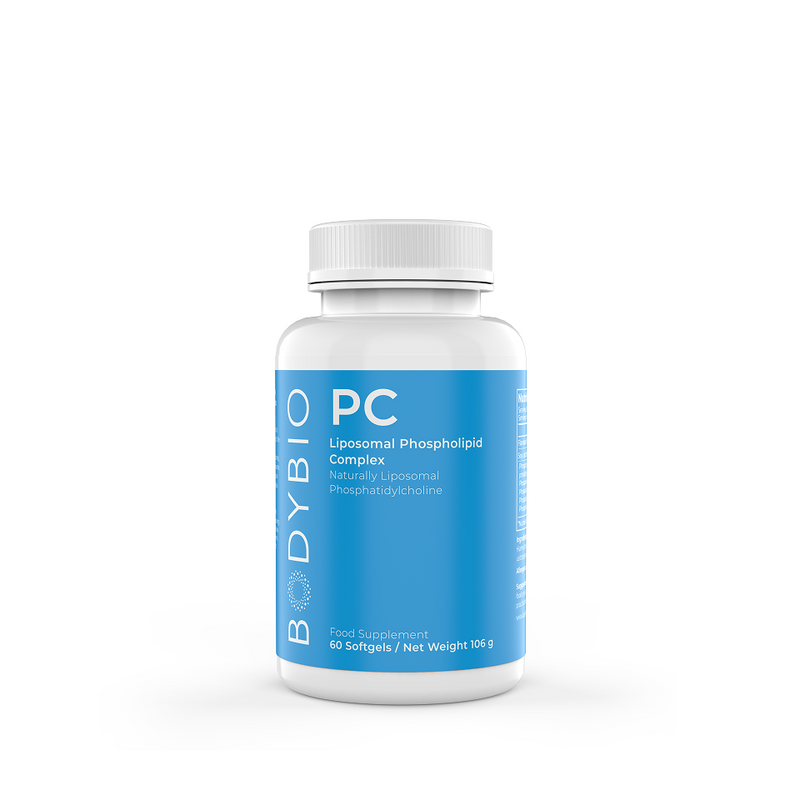
Learn more about BodyBio PC, your foundational supplement for cellular health and brain function.*

Related Articles

Ashley Palmer | 01.05.2026

The Missing Link in Longevity: Repair the Cell First, Everything Else Follows

You've cleaned up your diet. You're taking the supplements everyone's raving about. Maybe you've even invested in a longevity protocol complete with cold plunges and red light therapy. And yet, something's still off. Your energy isn't there. Your mental clarity comes and goes. Your body isn't responding the way you expect it to. What gives?

All those expensive interventions, cutting-edge health protocols, and carefully curated routines can only work if your cells are actually healthy enough to use them. Otherwise, your supplements are like sand slipping through the cracks of a broken foundation.

If you were a homebuilder, you wouldn't build your house on a pile of sand or a crumbling concrete foundation. You could have the best materials, the most skilled builders, the finest finishing carpenters... But if the foundation is compromised, everything you've built on top of that foundation would mean that the entire structure is at risk. Your cells are that foundation. And your health is that future home.

Here’s why you need to build your foundation first with phospholipids before every other supplement, lifestyle change, and nutrient optimization can revive your health from the cellular level.

Table of Contents:

  • Why Cellular Health is the Missing Piece

  • Phosphatidylcholine Declines as You Age

  • Why Phosphatidylcholine Supports Longevity

  • What Happens When Membranes Function Properly

  • Building Cellular Health for Longevity

Why Cellular Health is the Missing Piece

Longevity protocols (strategic approaches to slowing aging and extending vitality) all share one assumption: that your cellular health is strong enough to use what you're giving them. Most people focus on aging interventions without considering whether their cells are capable enough to put them to work.

Your body contains roughly 40 trillion cells (at least!). Every process that keeps your body functioning depends on those cells working properly. Energy production happens in the mitochondria, but your mitochondria need healthy membranes to generate adenosine triphosphate (ATP), the main energy ‘currency’ used by all living cells. Brain cells communicate through chemical signals, but those signals require flexible cell membranes (and the ability to allow molecules to pass through) to transmit information properly. Immune cells detect and respond to threats through membrane receptors. At the smallest level, the cell membrane runs everything. 

When cellular membranes are compromised, none of this works efficiently. Your mitochondria can't produce energy if their membranes are rigid (stiff and lacking that flexibility). Your brain cells can't signal effectively either if their membranes are too rigid. Those NAD+ boosters and longevity peptides? Not even those can enter your cells if the membrane isn't letting them through.

Phosphatidylcholine Declines as You Age

In younger tissues, phosphatidylcholine (PC) creates flexible cell membranes that allow rapid signaling and efficient nutrient transport. As PC declines with age, it gets replaced by sphingomyelin and cholesterol, stiffer lipids that reduce membrane flexibility. Your membranes become more rigid, and cellular processes slow down.

Studies of human brain aging show people lose roughly 10-20% of their phospholipids between ages 40 and 100. That significant decline affects how efficiently your cells function. Research also demonstrates that phosphatidylcholine supplementation extended lifespan in model organisms by nearly 29%. PC doesn't just support membrane structure; it influences how cells age at the most foundational level.*

Why Phosphatidylcholine Supports Longevity

Most longevity protocols and cellular health supplements focus on boosting NAD+, supporting mitochondria, reducing inflammation, and enhancing autophagy (the process where cells break down and recycle damaged components). All valuable, but these interventions assume your cells can actually absorb and use what you're giving them.

When cell membranes don't have enough PC, that absorption breaks down. Mitochondrial support can't reach mitochondrial membranes that are too rigid to let it work. Nootropics can't enhance signaling through neuronal membranes that lack the flexibility to transmit properly.

Researchers demonstrated this directly by isolating rat heart cells and removing PC from their environment. Beating rates dropped to 20 beats per minute. Some cells stopped beating entirely. When they added PC back, the cells recovered completely within 24 hours.

PC isn't about adding something extra. It's about restoring what your membranes need to function. Membrane fluidity affects nutrient transport, energy generation, cellular signaling… The basic processes that every other intervention depends on.

What Happens When Membranes Function Properly

When cellular membranes have adequate phospholipids, your body works better. 

  • Mitochondria generate ATP more efficiently. Mitochondria have their own membrane systems, and when those membranes are fluid and PC-rich, energy production works the way it’s intended. Your cells have the energy they need.*

  • Brain cells communicate more effectively. Neurons are particularly dependent on PC because membrane fluidity directly affects how neurotransmitters are released and how signals travel between cells. Better membrane composition means faster, clearer signaling between neurons.*

  • Liver cells process toxins properly. The liver relies on membrane-dependent enzymes for detoxification. When hepatic membranes are rigid, this process slows down. PC restoration allows these pathways to function normally, improving detoxification.*

  • Intestinal cells absorb nutrients more efficiently. Nutrient transport happens through membrane protein channels (tiny gateways that allow specific nutrients to pass through). PC supports these channels and allows them to work properly.*

This is why BodyBio PC delivers concentrated phospholipids in the most bioavailable form. 

When your cell membranes work, your cells work. When cells work, your longevity protocols have something solid and stable to build on. Translation? You feel better, for longer. 

Building Cellular Health for Longevity

Longevity protocols like NAD+ and peptide therapy can address symptoms and optimize processes. But they can't fix compromised cellular structure. Your cells need functional membranes to transport nutrients, generate energy, respond to signals, and clear waste. Without membrane integrity, these processes can’t work properly.

As you age, phospholipids like PC naturally decline. Supplementation isn't about enhancement; it's about giving your body the standard tools it needs to operate every day. It's about giving membranes what they lose over time, so everything else can work the way it's supposed to.

Give your cellular membranes the PC they need to function properly with BodyBio PC.*

Jess Kane | 11.07.2025

The History of BodyBio: Pioneering Cellular Health Since 1998

When you see a new wellness brand pop up, it often looks shiny, polished, and backed by a well-oiled marketing machine. But BodyBio isn’t that story. We’re not a trend. We’re a tradition.

For nearly 30 years, BodyBio has been quietly shaping the landscape of functional medicine and cellular health long before those terms entered the mainstream. Our history begins not with supplements, but with science.

The Origins: Science Before Supplements

In 1998, Ed Kane founded BodyBio with a simple but revolutionary idea: if you want to heal the body, you have to start with the cell.

Fueled by his own health challenges, Ed spent years researching what was making him sick with chronic fatigue. In the early 90’s Ed developed one of the first computerized diagnostic systems that linked blood chemistry and red blood cell fatty acids to nutrition. This became known as the BodyBio Biomedical Report, a groundbreaking tool that allowed doctors to see exactly where a patient’s biochemistry was imbalanced, and what nutrients could restore health.

At the time, functional medicine wasn’t a movement. Mark Hyman and the Cleveland Clinic hadn’t yet made it mainstream. But BodyBio was already doing the work in the 1990s: bringing together lab science, nutrition, and clinical practice to restore health at the cellular level.

Training the First Wave of Functional Medicine Practitioners

As word spread, doctors didn’t just want the report, they wanted training to incorporate this new technology into their practices. BodyBio became a hub for medical education, offering seminars, workshops, and one-on-one mentoring.

Thousands of practitioners learned how to interpret blood chemistry, analyze fatty acid profiles, and use targeted nutrition to change patient outcomes.

This was long before social media or online courses. Trust was built face-to-face, in conference rooms and classrooms filled with binders of case studies. BodyBio wasn’t marketing itself; it was mentoring a generation of doctors.

This hands-on approach is one reason why BodyBio is still trusted by over 35,000 healthcare practitioners today.

Products Born from Necessity, Not Trends

As doctors applied what they learned, they hit a roadblock: the products they needed simply didn’t exist. So BodyBio made them.

  • e-lyte — way before the days of powdered electrolytes this was one of the first sugar-free electrolyte concentrates, created to help patients restore hydration and cellular energy without additives.*

  • Balance Oil — based on groundbreaking research, which identified the optimal 4:1 ratio of omega-6 to omega-3 fatty acids for brain and cellular health.*

  • BodyBio PC (Phospholipid Complex) — developed through a proprietary extraction process that concentrated the phospholipids that rebuild and protect cell membranes.*

  • Butyrate — while the wellness world was fixated on probiotics, BodyBio was one of the first to recognize the power of this unique short-chain fatty acid. Ed Kane understood that antibiotics, pesticides, and herbicides were damaging the microbiome — and with it, our natural production of butyrate.*

These products weren’t designed to ride a wellness trend. They were built to solve real problems uncovered in the lab.

Why Lipids Matter: The Cellular Defense System

From the very beginning, BodyBio has emphasized one truth: health begins with the cell membrane.

Through his research, the blood test data, and working with leading doctors all over the world, Ed saw firsthand how modern life attacks our lipids — the fats that make up and protect our cell membranes. Processed oils, environmental toxins, chronic stress, and oxidative damage all erode the very boundary that allows cells to function.

When membranes break down, cells can’t communicate, detoxify, or repair. The result? The cascade of chronic illness we see today, from chronic fatigue to autoimmunity to neurological disorders.

By restoring phospholipids like phosphatidylcholine, and balancing essential fatty acids and electrolytes, we don’t just treat symptoms, we rebuild the very structure of life itself.

This philosophy set BodyBio apart then, and it still does today.

Carrying the Legacy Forward

In 2016, Ed asked his grandson Brad Berman to join as president to modernize BodyBio and expand its reach. Under his leadership, BodyBio underwent its first-ever brand transformation, bringing decades of practitioner-trusted science to a wider audience of people looking to improve gut health, brain health, and energy at the cellular level.

Today, BodyBio remains proudly family-owned and independent — now in its third generation. Jess and Brad Berman continue the mission their grandfather began: delivering uncompromising science and products that protect and restore health at the cellular level.

BodyBio Today: Where Legacy Meets Innovation

As the wellness space grows crowded with new brands, BodyBio’s difference is clear: we’re not newcomers. For three decades, we’ve:

  • Partnered with thousands of functional medicine doctors

  • Developed unique proprietary formulations like BodyBio PC and Balance Oil

  • Educated practitioners on the science of fatty acids, phospholipids, and electrolytes

  • Maintained independence as a family-owned company, free from trends and venture capital

And most importantly: we’ve never lost sight of the cell.

Not a Trend. A Tradition.

The BodyBio history is one of persistence, science, and legacy. We’ve been here since 1995, long before wellness was an industry, carrying forward a belief that true health begins in the cell.

And while trends will come and go, our mission remains the same: to protect, restore, and rebuild health — one cell at a time.

Curious? Learn more about the science behind cellular health. 

Ashley Palmer | 11.07.2025

The Mitochondria-Brain Connection: Why Cellular Energy Powers Mental Clarity

You've tried the supplements. You've adjusted your diet. Maybe you've even worked with practitioners who specialize in brain health. And yet, that persistent mental fog lingers. Your focus still wanders midsentence. Words you know perfectly well won't surface when you need them. The afternoon energy crash hits like clockwork.

What if the problem isn't just about neurotransmitter levels or blood flow? What if it starts deeper, at the cellular level, with tiny structures called mitochondria that power every thought, every memory, every moment of mental clarity you experience?

When your mitochondria struggle, your brain struggles. When they're properly supported, your thinking improves naturally. Understanding this connection is the foundation to actually address brain fog at its source.

Table of Contents:

  • What Are Mitochondria?

  • When Your Brain Runs Low on Energy

  • Why Most Brain Supplements Skip the Most Important Step

  • Supporting Your Mitochondria: What Actually Works

  • The Phosphatidylcholine Connection

  • Why Cellular Health Matters for Your Brain

  • Supporting Your Brain at the Cellular Level

What Are Mitochondria?

You probably remember mitochondria from high school biology as "the powerhouse of the cell." That's accurate, but it doesn't fully capture why they matter so much for your brain.

Mitochondria turn nutrients into ATP (adenosine triphosphate), the molecule your body uses as energy currency.  A single neuron can contain up to 2 million ATP-producing mitochondria, and your brain accounts for approximately 20% of your body's resting energy consumption despite representing only 2% of your total body weight.

When mitochondria can't produce enough ATP, neurons can't maintain essential functions. Signal transmission slows. Memory formation becomes less efficient. Your thoughts, emotions, and mental sharpness start breaking down—not because something is wrong with your neurons, but because they lack fuel.

This shows up as brain fog, difficulty focusing, and mood instability. That foggy feeling when you can't recall someone's name? Often an energy problem at the cellular level. Brain fog that doesn't respond to caffeine? Your cells are running low on energy. Even normal stressors feeling overwhelming? Mitochondrial dysfunction has been linked to anxiety and depression, conditions often resistant to treatments that don't address the underlying energy problem.

When Your Brain Runs Low on Energy

Most people don't recognize mitochondrial dysfunction when it first appears. Instead, they notice vague, frustrating symptoms that don't fit neatly into any diagnosis: difficulty concentrating, words that won't quite surface when needed, that foggy sensation making even routine tasks feel exhausting.

These symptoms point directly to an energy crisis at the cellular level. When mitochondria struggle to produce enough ATP, several cascading effects occur. Oxidative stress increases (cellular damage from unstable molecules). Struggling mitochondria produce more of these damaging molecules, which particularly harm the mitochondrial membranes themselves, especially the phospholipids that make up these membranes. When these membranes become damaged, energy production becomes less efficient, creating a cycle where compromised mitochondria get worse and worse at creating energy.

Why Most Brain Supplements Skip the Most Important Step

Browse any supplement aisle and you'll find countless products promising sharper focus, better memory, clearer thinking. Many provide building blocks for brain chemicals (amino acids like tyrosine or tryptophan) or herbs meant to support brain chemistry.

These supplements have their time and place, but if your mitochondria can't generate enough energy, all the brain chemical building blocks in the world won't help much. You can't make brain chemicals without ATP. You can't maintain connections between brain cells without energy. You can't form new neural pathways when cells are running low on fuel.

Addressing brain fog and mental fatigue requires working at the foundation: the energy systems powering every thought and emotion.

Supporting Your Mitochondria: What Actually Works

So how do you actually support these tiny energy producers? The answer involves reducing stressors and incorporating specific nutrients into your wellness routine.

  • Nourish with essential nutrients. Magnesium activates over 300 enzymes involved in energy production. B vitamins help convert food into usable energy. CoQ10 works in the energy production process where ATP is made. And phospholipids provide the building blocks for healthy mitochondrial membranes.

  • Reduce cellular damage. Chronic inflammation, environmental toxins, poor sleep, and excess stress all speed up mitochondrial damage. Prioritizing restorative sleep, managing blood sugar, staying hydrated, and minimizing processed oils helps protect your mitochondria.

  • Build mitochondrial resilience. Your body can create new mitochondria to replace damaged ones. Physical activity triggers this process, particularly in the brain. Even moderate movement matters. Practices like controlled cold exposure and time-restricted eating can also help.

The Phosphatidylcholine Connection

Among all nutrients supporting mitochondrial function, phosphatidylcholine (PC) deserves particular attention. PC is a key building block in both mitochondrial and brain cell membranes.*

Cell membranes aren't just protective barriers. In mitochondria, the inner membrane is where ATP generation happens. When membranes become rigid or damaged, energy production suffers. PC keeps these membranes healthy, resulting in improved energy production and enhanced brain cell communication.*

Research suggests PC levels decline by approximately 20% as we age, affecting both energy production and brain signaling. By supplementing with high-quality PC, you can support your mitochondria and your cell membranes at the same time.*

Why Cellular Health Matters for Your Brain

The philosophy behind cellular health is straightforward: when cells work well, everything else follows. Brain health isn't solely about brain chemical levels or blood flow. It's fundamentally about whether your neurons have healthy structures and enough energy to do their jobs.

A neuron is only as healthy as its membranes and mitochondria. When membranes become compromised, toxins enter more easily. When mitochondria can't produce enough ATP, the neuron runs low on energy, unable to fire signals reliably or maintain the connections that support memory and thinking.

Supporting cellular health through healthy mitochondria and membranes creates the foundation for better brain performance. This is why focusing on cellular health often produces improvements across multiple areas simultaneously: mental clarity, stable energy, stress resilience, and balanced moods.

Supporting Your Brain at the Cellular Level

If brain fog, mental fatigue, or declining focus have persisted despite trying everything else, you may have been addressing symptoms rather than the true root cause.

Mitochondria power every thought, memory, and moment of mental clarity. When they're properly supported, you establish the foundation for better thinking and resilience. Address the power source, and mental clarity naturally improves.

BodyBio PC delivers a complete phospholipid complex, including phosphatidylcholine, to support membrane health and cellular energy.*