



How to Choose the Best Sparkling Mineral Water + Our Recs
Key Points:
- Minerals are essential for our cellular health and we usually don’t get enough through our diet.
- Sparkling mineral water can provide an additional boost of minerals in addition to whole foods.
- Our pick for the best sparkling mineral water is Gerolsteiner.
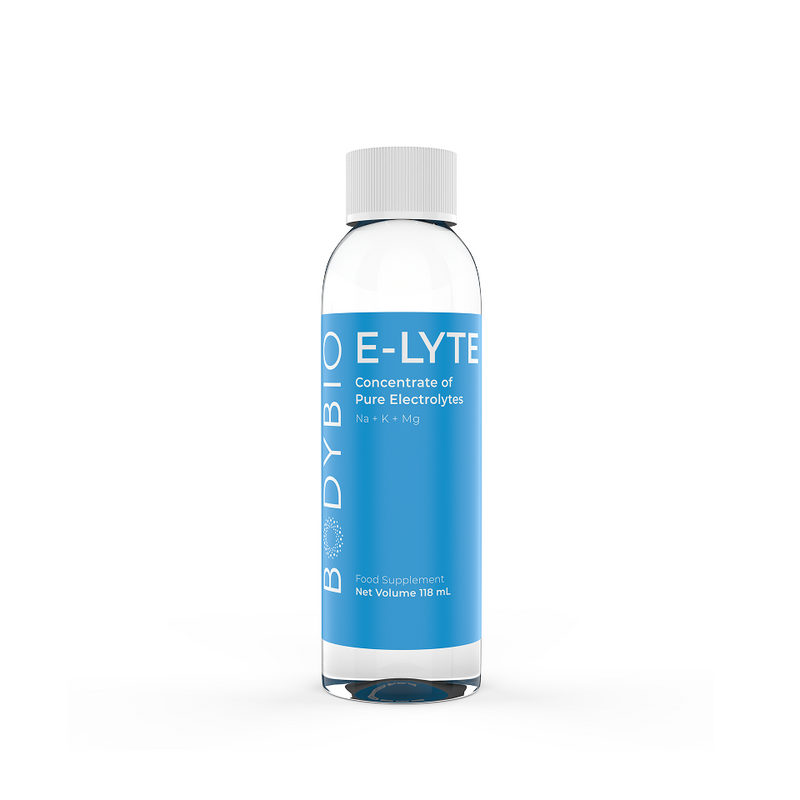
We’ve said it before and we’ll say it again: minerals are essential for your health. Minerals can not be synthesized in the body, so we must get them from our diet in our food and drink. Adding electrolytes to your beverages is an excellent idea, and we always recommend adding a splash of E-lyte to your plain old glass of filtered water.
But sometimes, the day calls for something a little more… bubbly. Sparkling mineral water is just the ticket for changing up your water routine while still getting in your daily mineral needs. So out of the many brands out there, which should you choose? In this article, we’ll discuss the benefits of sparkling mineral water and some of the brands we believe are doing it the best.
Table of Contents:
- Why Should You Drink Sparkling Mineral Water?
- Sparkling Mineral Water Brands We Like
- Should You Drink Sparkling Mineral Water if You Have Acid Reflux?
- Drink Sparkling Mineral Water for a Hydration Boost
Why Should You Drink Sparkling Mineral Water?
Minerals are essential: our bodies rely on minerals for catalyzing dozens of reactions in the body, supporting muscle and bone structure, and even producing hormones. You can think of minerals like the spark plugs to the engine of the body’s systems — without minerals, nothing gets started. And most of us aren’t getting all of the minerals we need on a daily basis through our food and drink, because of:
- Simply not eating and drinking enough
- Depleted minerals in our soils, which leads to depleted minerals in our food (even if you eat a completely whole foods diet!)
- Stress, which uses up minerals like crazy (This includes physical and mental/emotional stress.)
- Avoiding key minerals like salt even though real mineralized salt is extremely beneficial to the body
- Food intolerances such as a dairy intolerance, which would provide a significant source of calcium, for example.
These are just some of the obstacles to getting all of the minerals you need on a daily basis — and ideally you’re consuming more than you technically need so that your body is functioning optimally, not just adequately.
This is where small changes like drinking mineral water can make a big difference in your health, especially if you’re looking to optimize your health.
Other sparkling mineral water benefits:
- Tightly regulated sourcing and manufacturing: mineral water must come from pure sources deep underground
- Bottled right at the source due to natural carbonation
- Tastes refreshing and clean (which your average tap water usually does not).
Seltzer vs. Sparkling Mineral Water
Most of us have enjoyed a crisp LaCroix as a bubbly alternative to plain water. But your favorite seltzer is just water, carbonation, and typically some natural flavors (but sometimes real fruit juice, if you’re getting the good stuff). These aren’t necessarily bad for you, but they’re not providing much benefit either.
Drinking sparkling mineral water instead provides the minerals your body needs to actually hydrate your cells. Without adequate minerals, the water you drink is likely going right through you, leaving your cells thirsty for more. In our opinion, that gives mineral water the advantage over seltzer.
Sparkling Mineral Water Brands We Like
Gerolsteiner
Gerolsteiner might be the champagne of mineral waters. This bicarbonate-rich mineral water originates from the Volcanic Eifel in Germany, where the naturally purified water absorbs minerals and carbonic acid from the bedrock.
Gerolsteiner boasts a significantly higher mineral percentage than pretty much any other mineral water, especially bicarbonate at 1,800 mg per liter. Bicarbonate helps regulate your body’s pH levels and especially helps lower acidity in the body. Gerolsteiner also contains 348 mg of calcium, 108 mg of magnesium, and 118 mg of sodium per liter, according to their mineral calculator tool.
In our book, this makes Gerolsteiner sparkling mineral water a top contender for providing serious mineral support in every bottle.
Topo Chico
Topo Chico is one of those brands, somewhat similar to LaCroix, that is almost known more for the brand itself than the actual product. And, they make a pretty good mineral water.
However, they have gotten some attention in recent years when their mineral water tested for higher than usual levels of PFAS, a class of industrial chemicals known for having a long breakdown period in the body (we’re talking several years).
PFAS are known to cause several types of cancers and chronic diseases in high doses. At 9.76 parts per trillion (PPT) PFAS in Topo Chico, according to a Consumer Reports study, Topo Chico came in at several degrees below the EPA health advisory of no more than 70 PPT.
Still, this is a guideline, and we don’t have strict markers of what levels of PFAS are or are not acceptable for human health. Since that study was published, Topo Chico has further reduced their PFAS levels to an average of 3.9 PPT. This is a step in the right direction, but still a much higher PFAS content than many other brands.
If Topo Chico is your ride-or-die brand, maybe stick to one bottle a few times a week, as opposed to multiple bottles a day.
San Pellegrino and Perrier
If you’re totally unfamiliar with sparkling mineral water, you still might have seen San Pellegrino and Perrier out and about at restaurants or stores. Though they have a much lower mineral content than Gerolsteiner, they still provide some minerals and a clean taste.
Both brands were also tested in the Consumer Reports test on PFAS content; San Pellegrino was the third lowest tested at just .31 PPT, and Perrier was not far behind at 1.1 PPT.
Should You Drink Sparkling Mineral Water if You Have Acid Reflux?
There is an interesting debate over whether or not you should drink sparkling mineral water if you have occasional issues with acid reflux or gastroesophageal reflux disease (GERD).
The standard recommendation for patients with acid reflux is to avoid carbonated beverages of any kind, the idea being that they would disturb stomach acid and the bubbly carbonation would push acid up into the esophagus, causing heartburn. Certainly, this seems to be the case for many people.
But mineral water, especially high quality mineral water like Gerolsteiner, should be providing an acid neutralizing effect due to the presence of bicarbonate. So if the problem is high stomach acid, sparkling mineral water may actually have a soothing effect on acid reflux.
However, we suspect that most cases of acid reflux are actually due to low stomach acid rather than high. In this case, the warning to stay away from carbonated beverages, even ones loaded with minerals, may hold up. Still, everyone reacts differently, and you may find that the benefits outweigh the risks when it comes to acid reflux.
Drink Sparkling Mineral Water for a Hydration Boost
Sparkling mineral water can be an excellent, and dare we say fun way to add more minerals to your daily intake. Hydration is something we should all be more mindful of, and mineral waters provide an easy solution — drink up for your cells!
Quattrini, S., Pampaloni, B., & Brandi, M. L. (2016). Natural mineral waters: chemical characteristics and health effects. Clinical cases in mineral and bone metabolism : the official journal of the Italian Society of Osteoporosis, Mineral Metabolism, and Skeletal Diseases, 13(3), 173–180. https://doi.org/10.11138/ccmbm/2016.13.3.173