


NAD+, Cellular Energy, and the Missing Piece Most Supplements Overlook

Key Takeaways:
The idea of “anti-aging” has come a long way from magical thinking and miracle cures. Today, the most promising breakthroughs aren’t about stopping time—they’re about supporting the body at the cellular level, where aging actually begins.
That’s where NAD+ has earned so much attention. This naturally occurring molecule plays a critical role in cellular energy, repair, and resilience, and researchers have linked declining NAD+ levels to many of the hallmarks of aging. It makes sense that NAD supplements have become popular among people looking to stay sharp, energized, and healthy as they age.
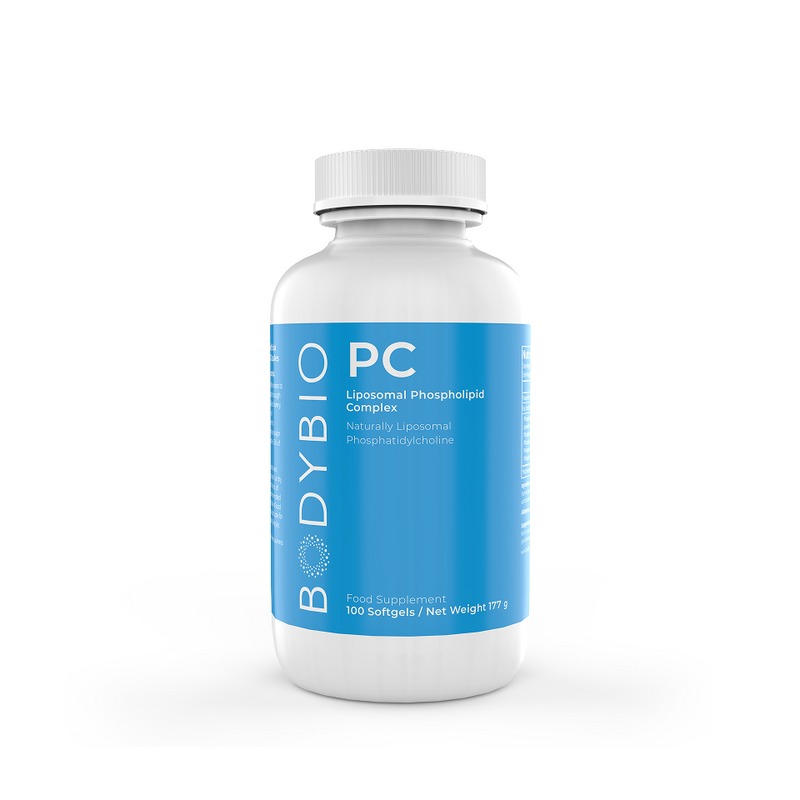
But here’s the piece that often gets overlooked: raising NAD levels doesn’t automatically mean your cells can use it well. If the cellular environment is compromised, even the most advanced supplement may fall short. That’s where phospholipids like phosphatidylcholine—PC—come in.
Table of Contents:
-
What NAD+ Does Inside Your Cells
-
Why NAD+ Declines With Age (and Stress)
-
Why Some People Don’t Feel Results From NAD Supplements
-
The Cell Membrane: Where NAD’s Work Begins
-
How Phosphatidylcholine (PC) Optimizes Cellular Function
-
Why PC Helps You Get More Out of NAD
-
Who May Benefit Most From Pairing PC With NAD
-
Final Thoughts: Start With the Cell
-
CTA: Support Your Cells With BodyBio PC
What NAD+ Does Inside Your Cells
NAD+ (nicotinamide adenine dinucleotide) is found in every living cell, and life simply doesn’t function without it. At its core, NAD+ helps convert the food you eat into usable cellular energy and supports critical repair processes inside the cell.
NAD+ also plays a role in maintaining DNA integrity and supporting proteins involved in metabolism, stress response, and cellular aging. You can think of NAD+ as a cellular recharge system—it keeps your cells energized, responsive, and resilient.
When NAD levels are sufficient, cells are better equipped to adapt to stress and maintain normal function. When levels drop, those same processes become less efficient.
Why NAD+ Declines With Age (and Stress)
NAD+ levels naturally decline as we age, but aging isn’t the only factor. Chronic stress, inflammation, environmental toxins, illness, and intense physical or mental demand can all accelerate NAD depletion.
Modern life places far more strain on our cells than ever before. As NAD levels fall, cells struggle to keep up with energy production and repair, which may contribute to fatigue, slower recovery, cognitive changes, and other age-related challenges.
This is why NAD supplementation has become so appealing—but supplementation alone doesn’t always tell the full story.
Why Some People Don’t Feel Results From NAD Supplements
Many people take NAD precursors and expect a noticeable shift in energy, focus, or vitality—yet some feel little to no difference. This isn’t necessarily because NAD doesn’t work. It’s often because cellular infrastructure matters just as much as cellular fuel.
For NAD to do its job, it must enter cells, interact with enzymes, and support internal processes efficiently. If cell membranes are damaged, rigid, or dysfunctional, that flow is disrupted. In other words, the cell may have the fuel—but not the ability to use it well.
This is where focusing on cellular structure becomes essential.
The Cell Membrane: Where NAD’s Work Begins
The cell membrane is far more than a protective barrier. It’s an active, dynamic structure that controls what enters and exits the cell, how signals are transmitted, and how energy flows inside.
When membranes are healthy and flexible, nutrients move efficiently and cellular communication stays clear. When membranes are damaged or rigid—often due to oxidative stress, aging, or nutrient depletion—those processes slow down.
A simple analogy: a charger won’t work properly if the outlet is broken. The same is true for NAD and the cell membrane.
How Phosphatidylcholine (PC) Optimizes Cellular Function
Phosphatidylcholine (a phospholipid) is a primary building block of cell membranes throughout the body. It helps maintain membrane fluidity, structural integrity, and proper signaling between cells.
The brain is especially dependent on PC, as it is made up largely of fat and relies heavily on healthy membranes for memory, focus, and cognitive performance. Low PC levels can impair these functions over time.
When delivered in a bioavailable, true liposomal form, PC can be absorbed through the digestive system and incorporated directly into cell membranes, helping repair and restore cellular structure where it’s needed most.*
Why PC Helps You Get More Out of NAD
PC doesn’t replace NAD—but it helps create the environment NAD needs to work effectively.* By restoring membrane integrity, PC improves nutrient uptake, energy signaling, and overall cellular efficiency.*
When membranes are supported, NAD can more easily enter cells and participate in the processes that drive energy production and repair. This is why PC is such a powerful complement to NAD supplementation, especially for those who feel like NAD alone hasn’t delivered the benefits they expected.
Think of PC as preparing the cell so that NAD can actually do its job.
Who May Benefit Most From Pairing PC With NAD
This cellular-first approach may be especially helpful for people focused on healthy aging, brain health, and long-term vitality.* It can also support those under chronic stress, with high cognitive demand, or recovering from illness.*
If you’re already taking an NAD supplement but aren’t seeing meaningful results, membrane support may be the missing piece. Supporting cellular structure first allows other nutrients to work more effectively.
Final Thoughts: Always Start With the Cell
There’s no modern Neverland where aging simply stops—but science has shown us the next best thing for graceful aging. When you support the cell, you support the entire system.
NAD+ plays an important role in cellular energy and repair, but without healthy membranes, its potential is limited. Phosphatidylcholine helps restore the foundation that allows NAD—and many other nutrients—to do their work.*
True longevity isn’t about chasing the newest supplement. It’s about building cellular resilience from the ground up.
If you’re exploring NAD supplementation—or simply want to support energy, brain health, and cellular aging—start with the foundation first.
Support your cells first. Everything else works better when you do.
Braidy, N., Berg, J., Clement, J., Khorshidi, F., Poljak, A., Jayasena, T., Grant, R., & Sachdev, P. (2019). Role of Nicotinamide Adenine Dinucleotide and Related Precursors as Therapeutic Targets for Age-Related Degenerative Diseases: Rationale, Biochemistry, Pharmacokinetics, and Outcomes. Antioxidants & redox signaling, 30(2), 251–294. https://doi.org/10.1089/ars.2017.7269
Chen, K. L., Li, L., Li, C. M., Wang, Y. R., Yang, F. X., Kuang, M. Q., & Wang, G. L. (2019). SIRT7 Regulates Lipopolysaccharide-Induced Inflammatory Injury by Suppressing the NF-κB Signaling Pathway. Oxidative medicine and cellular longevity, 2019, 3187972. https://doi.org/10.1155/2019/3187972
Igarashi, M., Miura, M., Williams, E., Jaksch, F., Kadowaki, T., Yamauchi, T., & Guarente, L. (2019). NAD+ supplementation rejuvenates aged gut adult stem cells. Aging cell, 18(3), e12935. https://doi.org/10.1111/acel.12935
Imai, S., & Guarente, L. (2014). NAD+ and sirtuins in aging and disease. Trends in cell biology, 24(8), 464–471. https://doi.org/10.1016/j.tcb.2014.04.002
Kulikova, V. A., Gromyko, D. V., & Nikiforov, A. A. (2018). The Regulatory Role of NAD in Human and Animal Cells. Biochemistry. Biokhimiia, 83(7), 800–812. https://doi.org/10.1134/S0006297918070040
Larrick, J. W., & Mendelsohn, A. R. (2019). Roads to the Fountain of Youth? Rejuvenating Intestinal Stem Cells. Rejuvenation research, 22(4), 342–347. https://doi.org/10.1089/rej.2019.2251
Matasic, D. S., Brenner, C., & London, B. (2018). Emerging potential benefits of modulating NAD+ metabolism in cardiovascular disease. American journal of physiology. Heart and circulatory physiology, 314(4), H839–H852. https://doi.org/10.1152/ajpheart.00409.2017
Mouchiroud, L., Houtkooper, R. H., & Auwerx, J. (2013). NAD⁺ metabolism: a therapeutic target for age-related metabolic disease. Critical reviews in biochemistry and molecular biology, 48(4), 397–408. https://doi.org/10.3109/10409238.2013.789479
Rajman, L., Chwalek, K., & Sinclair, D. A. (2018). Therapeutic Potential of NAD-Boosting Molecules: The In Vivo Evidence. Cell metabolism, 27(3), 529–547. https://doi.org/10.1016/j.cmet.2018.02.011
Sultani, G., Samsudeen, A. F., Osborne, B., & Turner, N. (2017). NAD+ : A key metabolic regulator with great therapeutic potential. Journal of neuroendocrinology, 29(10), 10.1111/jne.12508. https://doi.org/10.1111/jne.12508
Verdin E. (2015). NAD⁺ in aging, metabolism, and neurodegeneration. Science (New York, N.Y.), 350(6265), 1208–1213. https://doi.org/10.1126/science.aac4854
Wątroba, M., & Szukiewicz, D. (2016). The role of sirtuins in aging and age-related diseases. Advances in medical sciences, 61(1), 52–62. https://doi.org/10.1016/j.advms.2015.09.003
Yang, Y., & Sauve, A. A. (2016). NAD(+) metabolism: Bioenergetics, signaling and manipulation for therapy. Biochimica et biophysica acta, 1864(12), 1787–1800. https://doi.org/10.1016/j.bbapap.2016.06.014
McReynolds, M. R., Chellappa, K., & Baur, J. A. (2020). Age-related NAD+ decline. Experimental gerontology, 134, 110888. Advance online publication. https://doi.org/10.1016/j.exger.2020.110888
