




Add Electrolytes to Your Water to Boost Energy and Optimal Hydration

It’s a hot summer day and you’re outside doing yard work, exercising, or playing with the kids. You’re quickly working up a sweat, your body expelling water along with toxins and electrolytes. You grab a glass of ice cold water and drink it down, but later you feel tired, lethargic and maybe even a bit cranky after the earlier exertion.
This is what happens when your body loses both water and electrolytes and you don’t replace those electrolytes through your food and drink—you easily become dehydrated. Dehydration is one of the quickest routes to fatigue, low mood, and reduced cognitive performance, issues many of us face on a daily basis. [1]
Hear how severe dehydration and heat stroke affected Eddie - luckily he had Bodybio Elyte on hand.
Water alone—the mineral-less water most of us drink today—isn’t enough to hydrate our cells. We need electrolytes added to our water to facilitate electrical signaling throughout the body, conduct thousands of chemical reactions, and even support our mood and energy levels.
Electrolytes are perhaps the most important and most misunderstood nutrition essential for our cellular and whole body health—and they are the key to maintaining adequate hydration. Let’s dive into what hydration is, why your cells need it, and how you can optimize your hydration on a daily basis.
What is Hydration?
Hydration is defined as the process of maintaining water balance in the body. [2] When your body is properly hydrated, it is able to perform all of its tasks—detoxification, nutrient transport, blood circulation, and more—to the best of its ability. Hydration is particularly essential for skin, renal, gastrointestinal, and neurological health.
But really, hydration is the foundation of life; without it, every process in the body slows down and we feel the effects.
Importance of Proper Hydration on a Cellular Level
Let’s get microscopic—being hydrated all comes down to how well water and electrolytes can flow into and out of your cells. Without electrolytes, especially sodium and potassium, nothing gets in or out of your cells. These electrically charged minerals also stimulate muscle contraction and neuron connection.
Sodium (Na) contracts the cell membrane and potassium (K) relaxes it. In a muscle cell for example, calcium (Ca) signals hundreds of sodium ion channels to open, beginning the contraction process. Then magnesium (Mg) signals potassium to relax the cell. Voila, a muscle contraction. It’s easy to see how muscle cramps can happen when you don’t have enough electrolytes to go around, not to mention the resulting fatigue and weakness.
Benefits of Hydration
Okay, so your cells need hydration to function properly, and for that they need electrolytes. But what does that actually look like for you? The benefits of being well hydrated include:
- Abundant energy
- Better performance in sports and exercise
- Minimal physical fatigue
- Faster physical recovery
- Optimal cognition and memory
- Balanced mood and hormones.
Basically, being hydrated means you feel good and you perform well. Let’s move on to the specific electrolytes that support hydration.
Electrolytes and Hydration
To maintain hydration, our bodies require seven main electrolytes—sodium, chloride, potassium, magnesium, calcium, phosphorus, and bicarbonate.
Sodium. Sodium has been demonized for a long time in the medical community, and certainly you shouldn’t be getting the mass amounts of sodium found in processed and fast foods. But it is a critical mineral needed to keep your cells hydrated, stabilize blood pressure, and stimulate muscle contraction. When athletes push themselves too hard and begin to feel faint and nauseous, it’s partially because their cells are running out of sodium to keep water in the cell. [3]
Chloride. Chloride, often in the company of sodium, also helps to maintain proper fluid balance and pressure. You’ll find it in salt as sodium chloride. It’s also important for metabolic health. [4]
Potassium. Potassium is one of the big ones, controlling water, acid-base balance, muscle contraction, your heartbeat, and blood pressure. It also protects against bone loss with age and reduces the risk of kidney stones. Potassium deficiency is common in those who have chronic illness, the elderly, and those who eat a standard American diet. It is found intracellularly. [5]
Magnesium. Another key mineral that many people do not get enough of is magnesium. Magnesium catalyses over 300 biochemical reactions in the body and is instrumental in the formation of DNA and RNA. It affects muscle function, energy production, and carbohydrate and protein metabolism. Magnesium is also a relaxing mineral, on both a muscular and mental level. [6]
Calcium. We all know calcium as the mineral that strengthens our bones and teeth, but it also contracts cardiac and smooth muscles, supports blood clotting, maintains cell membrane permeability, and helps transmit nerve impulses. Calcium is often supplemented in processed foods so it may be left out of electrolyte products. But the trick is getting the right amount in the right ratio to the other minerals for it to be used properly in the body. [7]
Phosphorus. Phosphorus, like calcium, also supports strong teeth and bones. And it facilitates energy production and storage through ATP, gene transcription, and cell membrane function. [8, 9]
Bicarbonate. Bicarbonate can be synthesized in the body, so it’s also considered unnecessary to supplement. But it helps the other minerals to be more easily absorbed; one study showed that sodium and potassium bicarbonate along with calcium, potassium, and magnesium citrate improved anaerobic performance in soccer players. [10]
Tips for Optimizing Your Hydration Level
Here are a few ways you can make sure you optimize your hydration throughout the day.
Hydrate with electrolytes first thing in the morning
After we’ve been asleep for (hopefully) 7-9 hours, we wake up dehydrated. Our bodies have been hard at work detoxifying and repairing tissue throughout the night, and they need electrolyte and water replenishment upon waking up. As soon as you get up, reach for a glass of filtered water with electrolytes added to kick off your day with energy and fuel.
Preload electrolytes before a workout
When you exercise, your body is releasing water, electrolytes, and toxins through sweat. Your body is also using a lot of electrolytes to contract your muscles and create energy for movement. So loading up on electrolytes before you work out, not just during the workout or afterward, can help you perform better and maintain adequate hydration. Of course, make sure you’re still replenishing those electrolytes after you cool down too.
Prevent “keto flu” or fatigue during fasting periods
Adding electrolytes to your water throughout the day can help you feel more energized and alert while doing intermittent fasting. It can also help prevent the “keto flu,” symptoms like constipation, headache, halitosis, muscle cramps, diarrhea, and general weakness when transitioning into ketosis (burning fat for fuel instead of glucose) on a keto diet. Your body needs extra electrolyte and hydration support during this time, especially sodium and potassium. [11]
Consume electrolytes throughout the day to prevent dehydration
Electrolytes can come in a variety of different packages, including whole foods. You can incorporate things like:
- Coconut water
- Green tea
- Fresh fruits and veggies
- Fresh squeezed juices
- Bone broth
- Dairy
- Red meats, especially organ meat, also have high amounts of minerals/electrolytes.
If you’re eating a varied whole foods diet, you’re certainly getting electrolytes and minerals through your food. But odds are you still aren’t getting enough, especially if you’re active. Once you start adding electrolytes to your water or other beverages, you might notice that you start to crave them more. This is your body telling you to stay hydrated!
Try E-Lyte for Optimal Hydration

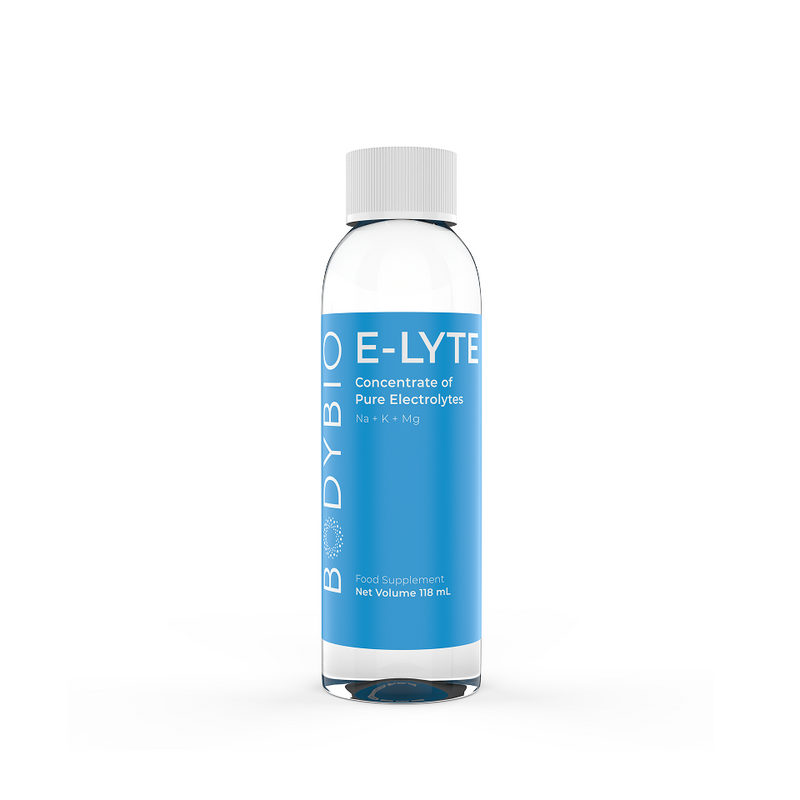
We developed BodyBio E-Lyte to provide an extra dose of the most critical electrolytes your cells crave: sodium, potassium, and magnesium. Just as important as what we add is what we leave out: natural or artificial sweeteners and additives. With E-Lyte, you just get a pure, salty electrolyte solution perfect for exercising or simply starting off your day with an extra boost of energy and vitality.