




Magnesium for Migraine Headaches & Other Functional Migraine Remedies


Key Takeaways:
Key Points:
- Frequent migraines are extremely debilitating — and usually don’t have an obvious treatment plan. Instead of relying solely on pharmaceutical medications, it’s important to dig deep to find the root cause of your migraines.
- Magnesium can be extremely effective in preventing migraines and may be a common root cause for sufferers. It’s estimated that anywhere between 20% and 75% of people are deficient in magnesium.
- Dehydration is a common cause of headaches and migraines. Sipping on fluids with electrolytes may be a simple way to ease the pain.
- Other interventions for frequent migraines include things like nervous system work, chiropractic care, and holistic dentistry.
Ice pack… blackout curtains… and a handful of painkillers.
If you’re a migraine sufferer, you know this routine all too well. Unfortunately, these interventions are rarely enough to stop a migraine in its tracks — and you’re left suffering.
It’s estimated that migraines affect about 10% of people worldwide. And most of those people struggle to find answers to the root cause of their intense headaches.
A root cause that creates so much pain can’t be that elusive, can it? Maybe it’s just not what most people expect.
One major potential root cause behind headaches and migraines is magnesium deficiency. Studies show that people who experience regular migraines are more likely to be low in magnesium. Let’s explore magnesium for headaches — a low-stakes therapy that’s shown to be incredibly effective at preventing painful migraines.
Table of Contents:
- The Root Cause of Migraines
- Magnesium for Headaches
- Which Magnesium Is Best for Migraines?
- Other Functional Solutions for Migraine Management
- Interrupt Your Migraines with Electrolytes
The Root Cause of Migraines
When it comes to migraine management, it’s important to investigate the root cause. Conventional treatments have their time and place, and often are necessary for quality of life. However, prescription painkillers can cause a lot of issues over time — and some can actually increase your chances of migraines with overuse.
By finding and addressing the root cause, you can return to regular life and feel better without side effects.
Structural Causes and Stress
Have you considered structural issues as the root cause of your migraines? Tight neck and shoulder muscles, head injuries, and even a weak jaw (which can often result from surgery, pulled teeth, or dental work) can increase tension in your head and neck, which may result in migraines.
If you often feel tight muscles around your shoulders and neck, grind your teeth at night, or have regular sinus headaches, we recommend you explore structural issues as a root cause of migraines.
Here are some ways to do that:
- Visit a holistic dentist
- Go to the chiropractor
- Get regular massages
- Decrease stress levels
- Practice regular yoga and mobility exercises
- Explore craniosacral therapy
Vitamin and Mineral Deficiencies (Magnesium for Migraine Prevention)
Magnesium is an essential mineral for the body and is involved in over 300 biochemical reactions in the body. In fact, it serves as a cofactor for many enzymes and is used by nearly every cell in the body. Due to things like poor-quality soil and processed foods, most people aren’t getting nearly enough magnesium.
It’s estimated that anywhere between 20% and 75% of people are deficient in magnesium.
Magnesium also plays an essential role in brain structure formation. It’s used for the formation of phospholipids, which the brain needs for cellular and cognitive function. About 60% of the brain is made up of lipids, including several types of phospholipids. Magnesium (or a deficiency) could directly impact your brain since it’s used as a building block for phospholipid formation.
A deficiency in B vitamins may also contribute to the development of headaches and migraines.
In studies, supplementing with vitamin B, B6, and B12 has helped to slow the frequency of migraines. This is just another example of why nutrient density is so important. Symptoms like frequent headaches give us a window into our health — and may be our body's way of alerting us to pay attention to a deficiency.
Dehydration
Insufficient fluid intake can lead to headaches and migraines. According to the National Headache Foundation, even mild dehydration can cause a dehydration headache or even a migraine–continuing to sip on fluids throughout the day may be a simple way to ease the pain.
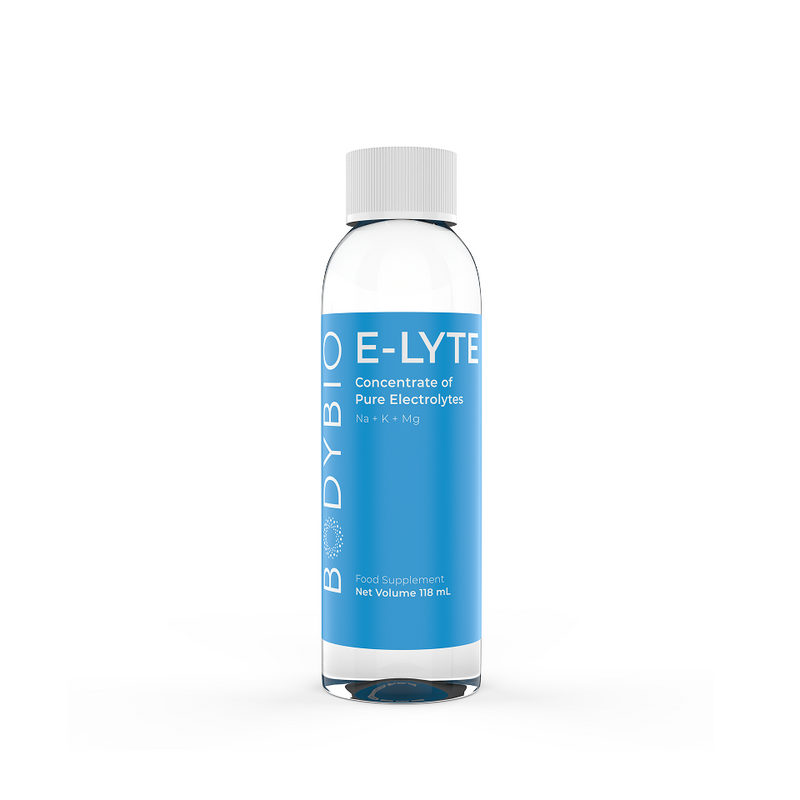
It’s important to note that drinking water is often not enough. A healthy dose of minerals and electrolytes is much needed to maintain optimal fluid levels throughout the body, including the brain. We love our E-Lyte electrolyte concentrate for a healthy and sugar-free solution to dehydration, especially if you’re active in the gym or sauna.
Food Allergies and Sensitivities
Another root cause to consider for migraines include food allergies and sensitivities. Foods (or food additives) can have different effects on different people. For some, gluten, dairy, tyramine, caffeine, nitrates, monosodium glutamate (or MSG), sugar substitutes, and alcohol can all trigger a migraine episode.
To uncover whether certain food groups could be causing your headaches, try an elimination diet. While you eliminate foods, you can also add in a healthy liquid mineral supplement, to give your body an extra boost of nutrition and support. Once you’ve adjusted to the new diet (and hopefully you’re feeling good), you can add foods back in one at a time to see if you notice a change in symptoms.
Hormone Imbalance
Hormone imbalance can cause a myriad of issues — especially if you’ve used birth control or have frequent exposure to hormone disruptors (check your personal care products and makeup bag!). Estrogen dominance, particularly, may be associated with migraines that occur during ovulation or around your period.
If you suspect this, try eating a diet rich in cruciferous veggies, which can help to clear your body of excess estrogen. Also, check on your liver health and consider taking supplements for detox to flush any excess toxins out of your body.
An Overactive Nervous System
One study explored the relationship between chronic nervous system dysregulation and migraines — and found there is indeed a connection. Frequent migraine sufferers share similar diagnostic characteristics to those with pure autonomic failure (which is a disorder of the autonomic nervous system).
If you suspect your nervous system is to blame, consider factors like:
- Long-term stress on your brain or body
- Physical/emotional trauma (did your migraines start after a car accident or a difficult loss?)
- Chronic illness (a notable cause of nervous system dysregulation over time)
- A history of concussions or brain injuries
Magnesium for Headaches and Migraines
Magnesium has shown to be an effective remedy for migraine prevention — since it loosens tight muscles and can help calm the nervous system. In addition, since it’s involved with phospholipid creation and cellular function, magnesium may also be vital when it comes to brain structure formation.
For chronic migraine sufferers, scans and tests may be used to see the structure of the brain and identify any abnormalities. Unfortunately, it’s common for most people to complete the scans without getting any diagnosis — perhaps without any visible abnormalities at all. (Not that we ever want to see something visibly wrong with the brain… but it still leaves us without an explanation).
Magnesium for headaches is a viable option in these cases because a mineral deficiency isn’t something that is detectable on a scan. Plus, it’s a minimally invasive intervention and affordable for most people.
Which Magnesium Is Best for Migraines?
These different types of magnesium are most often used for supplementation:
- Magnesium chloride
- Magnesium oxide
- Magnesium sulfate (usually synthetically created)
- Magnesium carbonate
- Magnesium citrate
- Magnesium glycinate
- Magnesium malate
- Magnesium L-threonate
We find magnesium chloride to be the most effective and natural form of magnesium available. It absorbs best into the body and acts quickly to help relieve muscle aches and (hopefully) migraines. Other magnesium options to look into include magnesium glycinate (known to be particularly calming) and magnesium L-threonate (great for the brain). You may need a combination of two or three different types to see the best results for migraine relief.
Other options like magnesium sulfate may be viewed by your body as toxic or unusable because of the way it's manufactured. Usually, only a small amount of magnesium sulfate can actually be metabolized. We recommend finding a higher-quality magnesium for migraine support.
Other Functional Solutions for Migraine Management
As a migraine sufferer, you don’t want to hear that there are a limited number of treatment plans and medications to help with your condition. Living with unbearable pain that comes on when you least expect it can certainly impact your quality of life.
The good news is, there are alternative remedies that can target the root cause of your pain. And, they may even help you find whole-body wellness, relieving other symptoms you didn’t realize were related.
Chiropractic Care and Massage
Chiropractic adjustments can loosen up your shoulder, back, jaw, and neck muscles. Tension headaches from tight muscles are common and can often turn into migraines. Regularly targeting those muscles and retraining your body to not hold onto so much tension can help prevent migraines before they start.
Nervous System Work
Migraines are common symptoms that follow brain injuries. But did you know brain injuries don’t only happen from concussions and head trauma? Extreme stress and long-term chronic illness can create an environment where the brain struggles to function normally, just like a brain post-traumatic injury. The limbic system (fear center of the brain) can take on emotional stress and change your brain patterns, eventually impacting your nervous system.
This is why nervous system work is so important in cases of migraines that are associated with high stress levels and long-term illness. In studies, vagus nerve stimulation (which helps stimulate the rest and digest response instead of fight or flight) has been shown to decrease migraine pain in about 50% of sufferers.
Holistic Dentistry
Modern dentistry is an invaluable tool that’s saved so many lives. However, like any time we change the natural makeup of the body, there can be consequences. Sometimes, pulling teeth and trauma to the jaw can weaken the jaw and encourage headaches. Visit a holistic dentist to see if they can help restructure your mouth to help with migraines.
Interrupt Your Migraine with Electrolytes
We believe in staying ahead of migraines and targeting the root cause of your symptoms. However, finding and targeting a root cause may take time.
In the meantime, one supplement we recommend for immediate migraine relief is BodyBio E-Lyte. Our E-Lyte product not only contains magnesium, but also includes a balanced dose of other liquid electrolytes (potassium + magnesium + sodium) that aids in rehydrating the body (and brain), calming the nervous system, and relieving muscle cramps.
While you work on the root cause of your migraines, E-Lyte may be able to provide some relief and help you return to your normal self — before, during, and after a migraine.
Yablon, L. A., & Mauskop, A. (2011). Magnesium in the Central Nervous System. [Online Book]. National Center for Biotechnology Information. https://www.ncbi.nlm.nih.gov/books/NBK507271/
Long, S., & Romani, A. M. (2014). Role of Cellular Magnesium in Human Diseases. Austin journal of nutrition and food sciences, 2(10), 1051.
DiNicolantonio, J. J., O'Keefe, J. H., & Wilson, W. (2018). Subclinical magnesium deficiency: a principal driver of cardiovascular disease and a public health crisis. Open heart, 5(1), e000668. https://doi.org/10.1136/openhrt-2017-000668
Domitrz, I., & Cegielska, J. (2022). Magnesium as an Important Factor in the Pathogenesis and Treatment of Migraine-From Theory to Practice. Nutrients, 14(5), 1089. https://doi.org/10.3390/nu14051089
Sacco, S., Ricci, S., Degan, D., & Carolei, A. (2012). Migraine in women: the role of hormones and their impact on vascular diseases. The journal of headache and pain, 13(3), 177–189. https://doi.org/10.1007/s10194-012-0424-y
Nematgorgani, S., Razeghi-Jahromi, S., Jafari, E., Togha, M., Rafiee, P., Ghorbani, Z., Ahmadi, Z. S., & Baigi, V. (2022). B vitamins and their combination could reduce migraine headaches: A randomized double-blind controlled trial. Current Journal of Neurology, 21(2), 105–118. https://doi.org/10.18502/cjn.v21i2.10494
Song, D., Li, P., Wang, Y., & Cao, J. (2023). Noninvasive vagus nerve stimulation for migraine: a systematic review and meta-analysis of randomized controlled trials. Frontiers in neurology, 14, 1190062. https://doi.org/10.3389/fneur.2023.1190062
Arca, K.N., Halker Singh, R.B. (2021). Dehydration and Headache. Curr Pain Headache Rep., 25(8), 56. https://doi.org/10.1007/s11916-021-00966-z